Below are several topics related to waste reduction and reuse efforts in the District. Read to learn more about resources in your community.
Food Recovery
Wasted food is an economic, environmental, and societal loss. In the United States, an estimated 30% of food is wasted by retailers and consumers.
Impact of Food Waste

Source Reduction 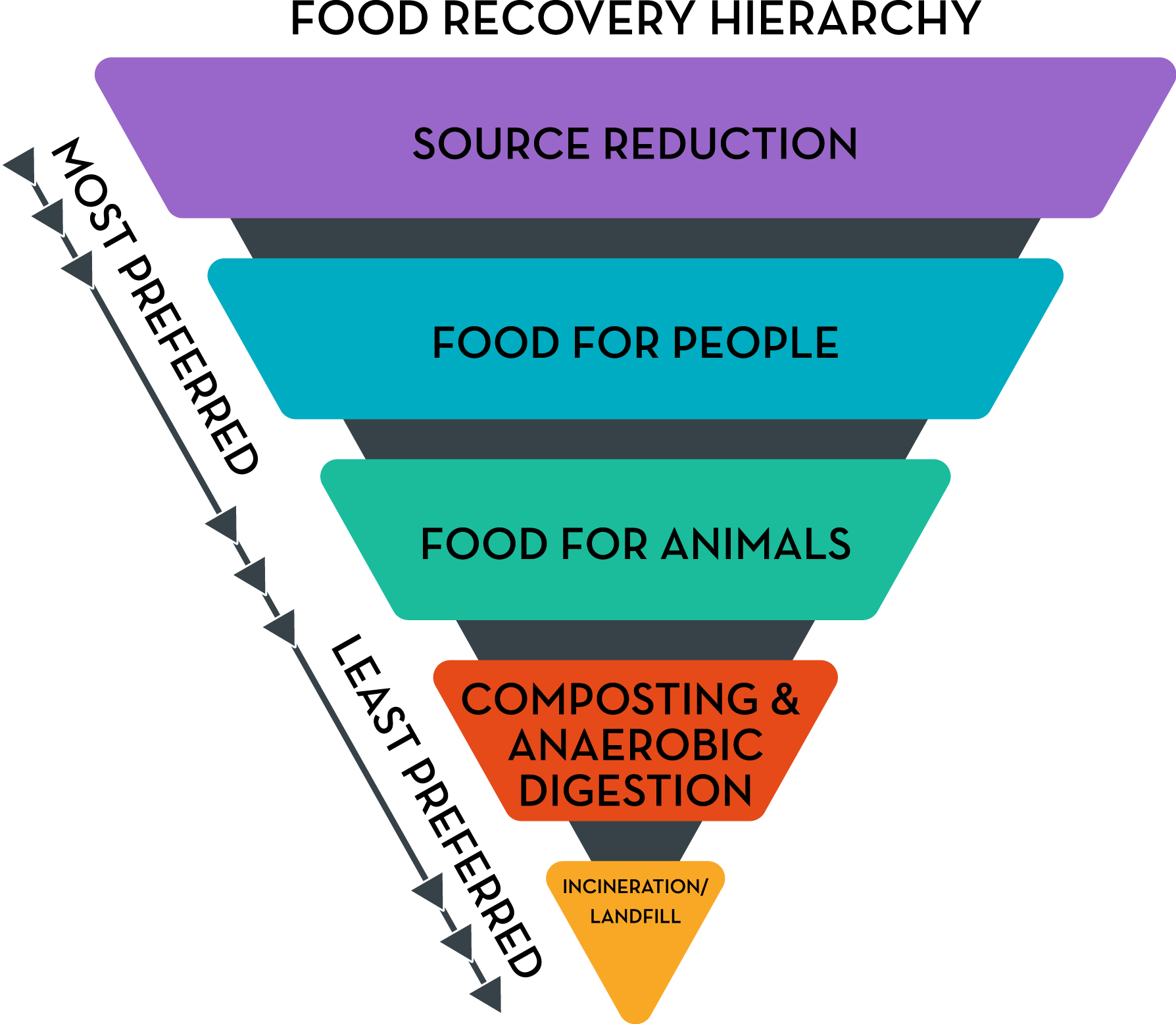
Source reduction is the priority of the food recovery hierarchy, since it reduces the volume of surplus food generated at its source. This includes approaches at home and in food businesses to make the most of food, such as more efficient purchasing and using up food instead of throwing it out. Learn more about source reduction on the Resources page.
After source reduction, feeding people with nutritious, wholesome food, rather than wasting it, is the most preferred way to recover food. District food businesses, individuals, and nonprofits can be part of the section below.
Learn more about how to sustainably manage food that can’t be fed to people at Zero Waste DC.
Food Waste Prevention Tips
Source reduction is the priority of the food recovery hierarchy, since it reduces the volume of surplus food generated at its source. This ranges from approaches at home and in food businesses to make the most of food.
At Home:
- Meal plan before purchasing groceries to make sure you’re buying only what you need.
- Buying fresh and local wherever possible means produce will last longer in your fridge since it spent less time in transit to get to you! Join the work to increase fresh food access in the District: check out dcfoodpolicy.org.
- Get creative with your recipes to use perishable food first and to re-energize leftovers.
- Check your food by smell and taste more than dates: many date labels are Sell By dates, which don’t reflect the time a product is designed to be in your home. A Best By date is generally a recommendation for peak taste but isn’t a reflection on food safety. Federal law only requires infant formula to have true Consume By dates.
- For tips on whether "questionable-looking" food is still good to eat, check out EatOrToss.com. The site also includes recipes for using up commonly wasted foods.
- Check out savethefood.com for recipes, a guest-imator to make the right amount of food for your guests, and lots of other tips on organizing your fridge and home!
In Food Businesses:
- Check out conserve.restaurant.org for dozens of great ways to reduce food waste in your restaurant, from menu planning to storage tips.
- Check out RescueDish for creative ways DC businesses are making the most of food by creatively using such as broccoli stems for broc tots or making carrot top pesto.
- Department of Small and Local Business Development's Food Waste Innovation Grants provide funding to businesses to cut their food waste through improvements in storage, processing, donation, and more.
Commercial Food Donation
Looking to Donate Food?
Multiple technology platforms connect food businesses with excess food with organizations that can receive food donations.
Capital Area Food Bank (CAFB)- MealConnect
- A Feeding America platform, MealConnect matches donors (food businesses of any kind) with CAFB partner agencies.
- Food businesses interested in donating can learn more and sign up at capitalareafoodbank.org/mealconnect.
Food Rescue US
- Local food donors (eg., grocers, restaurants, caterers, farmers’ markets, corporations, etc.) register available fresh food. In DC, more than 350 donors have participated since 2016.
- Learn more about how to sign up to donate food at foodrescue.us.
FoodRecovery.org (formerly MEANS Database)
- Food business donors post whenever they have extra food.
- Nonprofit users tell FoodRecovery.org what type of food they need. When any food donation fitting their need is posted, they get an email or SMS text message about it. If interested, they can claim the donation, and receive the contact information of the donor, and the donor receives contact information of the nonprofit to coordinate delivery.
- Learn more and sign up at foodrecovery.org.
Food Recovery Network
- A resource for colleges/universities, event planners, corporate dining, restaurants, grocers, and other food businesses looking to design and implement food recovery programs.
- Learn more at foodrecoverynetwork.org
Banquet Food
- The Banquet app is an end-to-end, paid service for grocery stores to increase their food donations. It simplifies the rescue creation process, hires a local driver for distribution, tracks the sustainability impact, and estimates tax receipts for the donor.
- Learn more at banquetfood.org and reach out to [email protected] for a demo.
Guidelines for Safe Commercial Food Donation
The Department of Public Works’ Office of Waste Diversion and DC Health collaborated to publish the Commercial Food Donation Guide. The guide explains fives steps to starting food donation at your commercial food business.
1. Learn: Read about which prepared, non-perishable, and dry foods can be donated by food establishments.
2. Plan: Think about the excess food your business creates and how to incorporate donation into your operations.
3. Connect: Contact organizations that accept food donations directly or use a service that can connect and transport your donations for you.
4. Safety: Remember to follow all food safety handling rules.
Volunteer as a Food Rescuer
Food Rescue US
- Join more than 400 active Food Rescue US volunteers who use their own cars to transport healthy surplus food donations from local businesses to nonprofits that assist the food insecure.
- To date, volunteers have rescued more than 8 million pounds of food with most rescues taking less than an hour from start to finish.
- Learn more about how to sign up to rescue food at foodrescue.us.
Food Recovery Network
- College/university students and food businesses interested in starting food recovery programs on campus, in daily operations, and/or at events can learn more at foodrecoverynetwork.org.
Liability Protection
With the Save Good Food Act of 2018, the District of Columbia expanded liability protection to include food donors who donate to either nonprofit organizations or directly to an individual. It also protects nonprofits that charge the end user a nominal fee to cover their production costs.
Protections to the Donor: A good faith donor who donates food to a bona fide charitable or nonprofit organization or directly to an individual for consumption is not liable for any damages unless there is evidence of gross negligence or intentional misconduct.
Protections to the Receiver: A bona fide charitable or not-for-profit organization that receives and distributes food not known or believed to be unfit for human consumption, without charge or at a charge sufficient to cover the cost of handling and preparing such food, is not liable unless the result of gross negligence or intentional misconduct.
See DC Official Code § 48–301(a-b) for complete liability protection language.
Clothes and Textiles
The Council for Textile Recycling estimates that the average American throws away more than 70 pounds of clothing and other textiles each year.
Impact of Textile Waste

Reduce Your Waste
Textile waste is the fastest growing category of waste in the United States since plastics. Consumers are changing their mindsets around clothing, prioritizing current trends over durability, and disposing of these items within a year of purchase. This idea of “fast fashion” has led to an overall increase in waste and pollution. Below are a few recommendations to stop textile waste at the source.
Shop and Swap Your Own Closet 
The best way to reduce textile waste is to decrease the amount of clothing and other textiles that you accumulate. Consider “shopping” your own closet before purchasing new items. Organizing your clothing is the best way to see what you have in order to avoid making unnecessary purchases. Try new clothes pairings to create new outfits. This works best if you have neutral, timeless pieces in your wardrobe, as opposed to trendy items.
Shop Thrift and Resale
If you decide that you do need something new, try shopping local thrift, resale and consignment stores. These establishments offer nearly new clothing and textiles, and you might even stumble across a hidden gem or two. This is also a great way to make some extra money by selling your unwanted items. Some resale shops pay you cash on the spot, and most consignment shops pay you a portion (up to 50%) of the price once the items have sold. For opportunities to buy second hand please visit the Reuse DC Directory.
Waste Prevention Tips
Repair
Prompted by the low cost of clothing, it would seem as though darning socks or replacing buttons is a thing of the past. Repairing and “rewearing” extends the life of your clothing. Bring your items in need of repair to the free community repair events offered by Fix-It DC. To look for professional repair businesses in the District visit the Reuse DC Directory.
Donate
Unwanted clothing and textiles do not belong in the trash. The collection and redistribution of clothing and other textiles benefit local residents and keeps reusable and recoverable items out of the waste stream. Find local donation sites or donation pick-up services. Items that are dry and odorless should be donated regardless of their condition.
Recycle
Unwanted clothing and textiles do not belong in the trash. Even items in unwearable condition can find a second life as insulation material or industrial rags. Some donation drop-off sites may specifically request only items in wearable condition while others, like clothing retailer H&M or textile collection company Helpsy, advertise that they will accept items in any condition as long as they are clean, dry and odorless.
Disposal
Clothing that is disposed of often ends up in landfills. The decay of textiles contributes to the production of lethal gases that contribute to climate change. So before you dispose of clothing or textiles, be sure you have exhausted all other possible options for reuse and recycling.
Clothing Swaps
A popular alternative to buying new, clothing swaps are a great way to recycle old clothing with those in your community and find some new-to-you pieces. The goal is to trade quality clothing, shoes, and accessories for no cost, and give your tired items a new life with someone else. To look for events, check out the Reuse DC events page.
If hosting a swap is something you are interested in, follow these steps to plan an event for your community, or even just a few friends.
1. Find a location. If the swap is small enough, you could host it in your own home. If you want to host a larger event, find a place in your community that would be willing to host you. Reach out to local schools, places of worship, and other community centers. If the weather is expected to be pleasant, try local parks or other outdoor event spaces. Your objective is to find an open space large enough to spread out everyone’s items.
2. Set limitations. Clothing swaps can include anything from shirts to jewelry, and a lot of variety can be beneficial for your guests but be clear in your communications. Let attendees know what you expect from them. Bring high quality items, avoid pieces with stains, rips or wear. You will be responsible for what is leftover, so encourage attendees to only bring things that others will be interested in taking. Additionally, if excess quantity or space is a concern, set a maximum item count per item.
3. Think about your display. It is important that your guests can see all the items available and find their size. Consider how you will display the pieces to connect them with the right people. Your attendees will appreciate the easy browsing and will be more incentivized to attend the next one.
4. Invest time in advertisement. For clothing swaps, your guests are also your inventory. Think about the best way to get the word out in your community, since more guests mean more variety of items. If you are partnering with any local organizations, promote each other for the event to spread awareness.
5. Be prepared to leave with extra items. Sometimes guests will use swaps to clean out their closets and aren’t looking to take any items for themselves, or to get rid of their lower quality items. This isn’t always the case, but it can result in a lot of items leftover. Partner with an organization that will accept your leftover inventory, either for donation or recycling.
ReThread DC
ReThread DC, the District of Columbia’s textile reuse and recovery initiative, provides local residents and visitors resources for decreasing the impact that their clothing (and other textiles) has on the environment.
The Council for Textile Recycling estimates that the average American throws away more than 70 pounds of clothing and other textiles each year. Textiles consisting of clothing, shoes, bed linens and towels are more than 6% of Washington, DC’s annual residential waste stream based on the 2021 Desktop Waste Characterization Study. That means our city is spending more than $200,000 a year to dispose of unwanted clothing and other textiles as trash. Sending valuable textiles to landfills or waste-to-energy facilities contributes to the causes of climate change by releasing toxic greenhouse gases into the atmosphere. Reusing, recovering or recycling textiles removes them from the waste stream, extends the life of garments, provides a source of affordable clothing for local families, and serves as raw material for the development of new items.
ReThread DC will:
- Create a culture of recovery and reuse in the District,
- Provide resources for minimizing and diverting textile waste, and
- Support the creation of economic opportunities in textile recovery, repair and reuse.
How Do I Get involved?
- Follow our Reuse DC Events to find out about upcoming opportunities to learn more about textile recovery, reuse, repair and recycling.
- Subscribe to our Sustainable DC Newsletter
Not only is trash unsightly, but it pollutes local streams and rivers when rain washing it down storm drains. The District is working to reduce plastic waste through education, research, and policy.
Avoiding Plastic
Impact of Plastic Waste

Waste Reduction Tips
You can reduce your plastic waste in your everyday life by following a few quick tips.
- Do you forget your reusable grocery bag often? Give yourself a reminder to bring your bags by adding it to the top of your grocery list or keep one folded in your backpack for easy access.
- Beat the summer heat with a reusable water bottle. They can hold more than twice the amount of water than a single-use plastic water bottle while keeping your drinks cool.
- Say no to the straw! Keep a slim reusable straw in your bag or car ready to go.
- Make your own zero-waste kit for on the go. Keep a fork, knife, spoon and cloth napkin in a pouch at your office or in your bag.
Policies in the District
The District has several laws and policies aimed at reducing some of the most common types of trash we see littering our neighborhoods and polluting our waterways, especially plastics.
District laws and policies targeting trash include the Bag Law, the Foam Ban, and the Material Requirements for Food Service Ware, which include the ban on plastic straws and stirrers. More recently, the Zero Waste Act brought about the Utensils-by-Request law, which is intended to continue reducing waste from single-use food service ware. DOEE is responsible for the outreach and enforcement of these policies.
DOEE in Action
In addition to enforcing the policies listed above, the Department of Energy and Environment has several programs aimed at education, community engagement, trash capture, and monitoring of trash. Learn more at Trash Free DC.
Household Items
Much of today’s furniture and home decor is made quickly and from cheap materials with little durability, leading to many household items being sent to landfills and incineration. District residents can decrease this environmental impact by buying secondhand, repairing, and upcycling pre-owned materials.
Impact of Household Items

Waste Reduction Tips
Donate:
Avoid disposing of furniture and other home goods by donating or selling. Check the Reuse Directory to discover organizations looking for donations.
Buy Vintage:
If you need to buy new furniture or decor, there are plenty of good finds at secondhand stores or antique retailers. These older pieces were made to last longer, to pass down to future generations. With a few minor repairs or refurbishing, these older pieces can be made to look new.
Upcycle:
Looking for a particularly niche item? You can still buy secondhand and give new life to old pieces, or consider repurposing an item you already have. A new coat of paint or stain, updating the hardware, and getting creative can increase the piece’s longevity and fulfill the need for something new. If you don’t have those types of skills, check out our Fix-It DC program, where you can learn those skills from an expert coach.
Appliances
The best way to make appliances last as long as possible is to regularly maintain them. Follow these tips below to regular maintenance of an assortment of common appliances:

Give repair a chance if appliances start having problems or stop working altogether. Residents can bring appliances or other household items to a Fix-It DC clinic and learn how to repair their items.
Donate used appliances to organizations in the community, such as Habitat for Humanity, The Salvation Army or Community Forklift. Some organizations offer free pickup services.
Sustainable Purchasing
Certain decor items such as bedding, towels, curtains and rugs are more interchangeable than large furniture pieces and fall victim to changing trends. Additionally, much of these textile products are made from synthetic materials and shed harmful microplastics. It is best to shop for these items secondhand, but if you need to buy new, avoid materials like nylon and polyester, and choose products with sustainably sourced cloth such as bamboo fabric, organic hemp, linen or recycled cotton, to name a few.
There are many options for purchasing home decor and furniture secondhand, but if you are looking for something specific and must buy new, there are important things to take into consideration. Look for durable, long-lasting furniture, or items without harmful chemicals. Conveniently, avoiding chemically treated and low-quality furniture go hand-in-hand as fast furniture tends to use chemically treated materials to make the cheapest types of furniture. To find pre-loved furniture, check out our Reuse Directory.
Emergency Situations
Unsolicited donated goods (e.g., clothing, miscellaneous household items, mixed or perishable foodstuffs) require voluntary agencies to redirect valuable resources away from providing services to sort, package, transport, warehouse, and distribute items that may not meet the needs of disaster survivors. Please do not donate unsolicited items. Explore the resources below to learn how to properly donate money, time, and goods.
Methods of Donation

Volunteer Your Time
- Serve DC- Find volunteer opportunities at local organizations.
- CERT Training- The Community Emergency Response Team (CERT) Program educates families and individuals about preparing for disasters or hazards that may impact their area. CERT trains people in basic disaster response skills such as fire safety, light search and rescue, team organization, and disaster medical operations.
Donate Your Funds
- During emergency situations, financial donations give responding organizations the most flexibility to respond to the needs of the community. The number one need in any disaster is for financial donations. Donating money to trusted voluntary-, faith - and community-based charitable organizations allows these organizations the ability to purchase immediate needs survivors have.
- The National Voluntary Organizations Active in Disaster (NVOAD) lists trusted organizations receiving donations. Learn how to donate to current responses here: https://www.nvoad.org/current-responses/
Give Goods Responsibly
- Never donate unsolicited items. Always check with the receiving organization that the donation follows their guidelines.
- A good time to donate items is before the next emergency . If you have items that you want to donate now, visit the Reuse DC Directory to find local donation centers.
Resources
- https://ready.dc.gov/
- https://hsema.dc.gov/page/alertdc
- https://www.fema.gov/disaster/recover/volunteer-donate
- https://fema.cosocloud.com/Donations
Building Materials
When buildings are demolished most of their materials typically go to landfill, wasting resources and creating more environmental problems.

Building Material Reuse in the DC Area
Community Forklift
Since 2005, Community Forklift has been a pillar of building material reuse in the DC Area. Their 40,000 square-foot warehouse and donation center is just across the DC border in Edmonston, MD. In addition to selling low cost building material, Community Forklift distributes free materials to other nonprofits and households with limited resources through their Home Essentials Program and Community Building Blocks.
Habitat for Humanity
Habitat ReStores are home improvement stores that accept small and large donations of new or gently used furniture, appliances, housewares, building materials and more. There are no ReStores in DC, but there are stores located nearby in Maryland and Virginia.
Rheaply
Rheaply’s free-to-join Public Reuse Marketplace enables businesses of all sizes in the DC area to circulate the valuable resources and reduce unnecessary waste, carbon emissions, and spending.
Others on the Directory
Search the Reuse Directory to find other opportunities in the DC area to donate or shop second-hand.
Deconstruction in Action
Deconstruction is like construction in reverse. It involves the careful disassembly of a home or building to recover materials that can be reused or repurposed. Through a Green Building Fund Grant from DOEE, Community Forklift was able to expand their services to offer free partial deconstruction to DC area homeowners and businesses. The materials salvaged by Community Forklift’s deconstruction program are sold at low prices in their reuse warehouse or are donated to local residents and nonprofit organizations through their community giving programs.
Learn more about Community Forklift’s deconstruction work here.